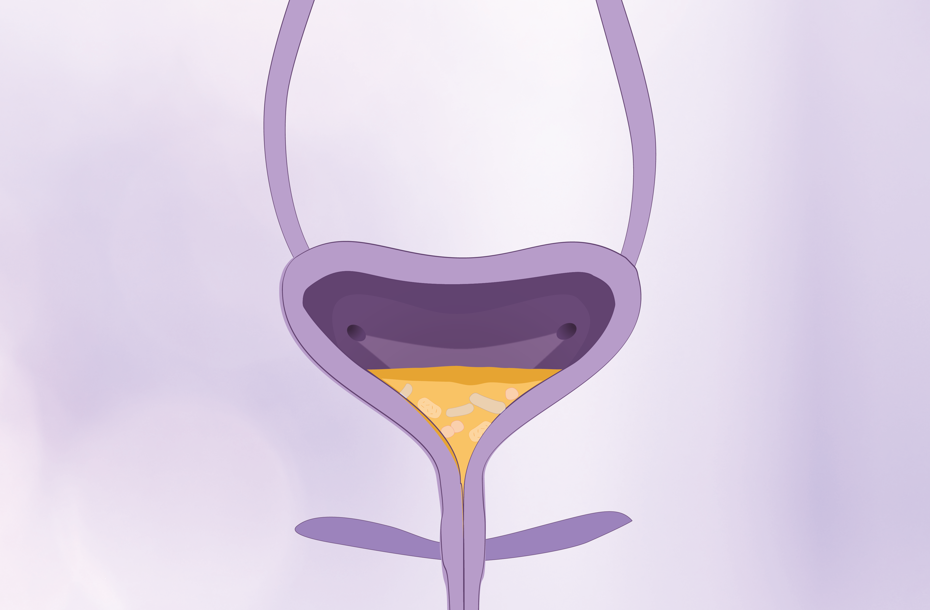
Maintaining bladder health involves more than simply emptying the bladder regularly. How effectively the bladder is emptied can have important implications for urinary tract health, influencing factors such as infection risk, bladder pressures, and the accumulation of sediment and debris over time.
When discussing intermittent catheterization (IC), conversations often focus on frequency—how often a patient should catheterize to maintain safe bladder volumes. While frequency is undoubtedly important, it is only one part of the picture.
Equally important is ensuring that the bladder is emptied as completely as possible during each catheterization. Persistent residual urine can contribute to urinary stasis, creating conditions that may increase the risk of infection, sediment accumulation, elevated bladder pressures, and other long-term complications1,2,3.
Understanding why complete bladder emptying matters can help healthcare professionals support patients in maintaining long-term bladder health and preventing avoidable complications.
What is Residual Urine?
Residual urine, also known as post-void residual (PVR) urine, refers to the volume of urine remaining in the bladder after voiding or catheterization.
A single episode of incomplete emptying is not usually clinically significant. However, when residual urine remains consistently over time, chronic urinary stasis can develop. In this situation, urine is repeatedly retained within the bladder rather than being regularly flushed out. For many patients, particularly those with neurogenic bladder dysfunction, incomplete emptying may occur without obvious symptoms, meaning residual urine can accumulate over time without the patient being aware of it1,2,3.
Why Does Residual Urine Occur?
There are many reasons why a patient may not completely empty their bladder.
Underlying causes may include neurological conditions such as spinal cord injury, multiple sclerosis, or Parkinson's disease. Mechanical factors such as benign prostatic enlargement, pelvic organ prolapse, fecal impaction, or prostate cancer can also impair bladder emptying. Medication-related effects, urinary tract inflammation, and infection may also contribute.
Importantly, incomplete emptying is not always caused by the underlying condition alone. In patients using intermittent catheterization, factors such as technique, rushing the procedure, inadequate drainage time, catheter positioning, or difficulties with catheter use may all influence how effectively the bladder is emptied4.
Recognising these potential contributors is important when evaluating patients experiencing recurrent urinary tract complications or ongoing lower urinary tract symptoms.
Residual Urine and Infection Risk
One of the most important consequences of persistent residual urine is an increased risk of bacterial growth.
Normally, bladder emptying helps flush bacteria from the urinary tract. When urine remains behind, bacteria are provided with a warm, nutrient-rich environment in which they can persist and multiply. Residual urine also gives bacteria more time to adhere to the bladder wall and may facilitate biofilm formation3,5.
Over time, this can contribute to recurrent urinary tract infections (UTIs), repeated antibiotic exposure, and potentially the development of antimicrobial resistance. For healthcare professionals supporting patients with recurrent UTIs, consideration should therefore be given not only to catheterization frequency, but also to whether complete bladder emptying is being achieved consistently.
Bladder Pressure Matters Too
The consequences of incomplete emptying extend beyond infection risk.
When urine remains in the bladder after catheterization, newly produced urine accumulates on top of the residual volume. Over time, this may contribute to increased bladder storage pressures and reduced bladder compliance. Persistently elevated bladder pressures may be associated with urinary leakage, bladder wall changes, and increased strain on the upper urinary tract2,6,7.
Maintaining low residual volumes through effective bladder emptying is therefore an important component of preserving bladder function and protecting the urinary tract.
Urine is More Than Just Liquid
When discussing bladder emptying, it is easy to focus solely on urine volume. However, urine is much more than just liquid.
Urine naturally contains cells, mucus, crystals, proteins, and other particulate debris. Recent research has shown that while most particles present in urine are small—often less than 50 μm in size—larger particles can also occur, particularly in individuals with lower urinary tract dysfunction8,9.
When residual urine remains in the bladder, these suspended particles are not removed. Instead, they may settle over time, allowing sediment and crystals to accumulate. This process is believed to contribute to the conditions associated with bladder stone formation10,11.
Complete bladder emptying therefore involves more than removing urine volume alone—it also helps clear sediment, crystals, mucus, and debris that would otherwise remain within the bladder.
Patients at Increased Risk
Many patients who require intermittent catheterization already belong to groups known to have an elevated risk of urinary tract complications.
Individuals with spinal cord injury frequently experience urinary tract complications, with bladder stones representing one of the most common long-term urinary tract complications. Patients with multiple sclerosis have been reported to have a substantially increased risk of urinary tract stone formation, while bladder stones are significantly more common in men with bladder outlet obstruction caused by benign prostatic enlargement12,13,14.
These patients often experience additional risk factors, including residual urine, altered bladder sensation, recurrent infections, and long-term catheter use.
For these individuals, supporting effective bladder emptying may be particularly important as part of a broader bladder health strategy.
Supporting Effective Emptying During Intermittent Catheterization
Achieving complete bladder emptying depends on several factors.
Patient education remains fundamental. Correct positioning, allowing sufficient drainage time, and avoiding premature catheter removal all play important roles. Some catheter users may also be taught to slowly withdraw and reposition the catheter towards the end of drainage to help empty remaining urine1.
Healthcare professionals should therefore ensure that patients not only understand when to catheterize, but also how to perform the procedure effectively.
Catheter characteristics may also influence drainage. While complete emptying is dependent on technique, catheter designs that support continuous drainage and effective urine flow may help simplify the catheterization process and reduce the likelihood of residual urine remaining in the bladder.
This may be particularly relevant for patients at higher risk of complications such as recurrent UTIs, significant sediment, mucus accumulation, or bladder stone formation.
Looking Beyond Frequency
When reviewing bladder management routines, it can be tempting to focus primarily on catheterization frequency or bladder volume targets. However, complete bladder emptying deserves equal attention.
A patient who catheterizes at the correct intervals but consistently leaves residual urine may still be exposed to the consequences of chronic urinary stasis. By considering both frequency and effectiveness of emptying, healthcare professionals can take a more comprehensive approach to bladder health.
For many patients, particularly those who rely on intermittent catheterization for years or even decades, small amounts of residual urine left behind repeatedly may have greater significance than a single episode of incomplete emptying.
Conclusion
Complete bladder emptying plays a fundamental role in maintaining bladder health. Persistent residual urine can contribute to bacterial growth, urinary stasis, elevated bladder pressures, and the accumulation of sediment and debris over time2,3,8.
For patients using intermittent catheterization, effective emptying depends on a combination of patient education, technique, and appropriate catheter use. By recognising the importance of residual urine and supporting strategies that promote complete emptying, healthcare professionals can help reduce complications and support long-term urinary tract health.
Ultimately, bladder health is not only about how often the bladder is emptied—but how effectively it is emptied each time.